Why the Sellers With the Most AI Tools Get the Least Out of Them
Ask someone what's in their AI stack and you'll know their level in about a minute.
A beginner gives you a list of apps. Someone who actually runs on AI tells you how the pieces talk to each other.
Beginners collect tools. The AI-native connect them.
The longest list is a warning sign
My recruiting firm started asking every sales candidate about AI this summer. 81 B2B sellers gave us a real answer between August 17 and September 23.
The sellers who used AI one task at a time, with no routine, named 2.1 tools on average. The sellers with a real routine, like a saved prompt they run before every call or a job that runs without them, named fewer. Usually one or two.
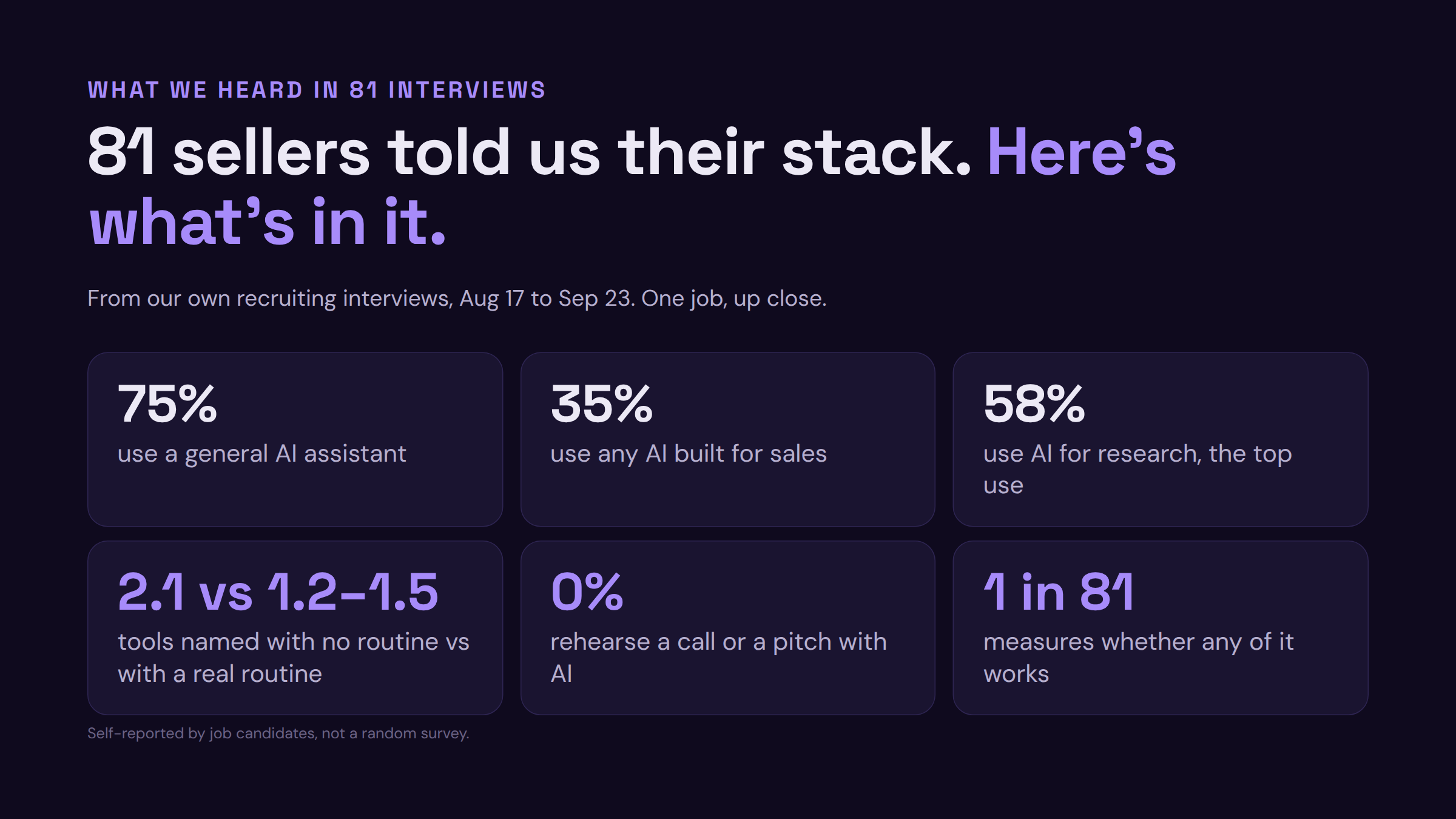
(These are job candidates describing their own habits, not a survey. Treat it as directional.)
Why does a routine matter so much? Salesforce's 2026 State of Sales research found reps spend 60% of their time on work that isn't selling. Hunting for the right deck, typing notes into the CRM, chasing approvals.
A routine is how that work comes off their desk. The same prompt before every call, the same recap after. It runs, and they get back to talking to buyers.
A seller with ten tools and no routine just has ten more places to lose that 60%.
You already pay for the assistant
Ramp is a corporate card and expense company. Every month it publishes an AI Index built from what its business customers actually pay for. In September 2026 it reported that 43.8% of businesses on Ramp paid Anthropic for Claude and 39.8% paid OpenAI. Those businesses lean toward startups and tech companies, so it's not every company. Still, most teams reading this already pay for an AI assistant.
So the gap is somewhere else. It's whether that assistant can see your work.
Every app now ships its own AI. Gemini in Gmail. Breeze in HubSpot. Ask each one "what can you do for me?" and it only talks about its own app. Your CRM's assistant can't see your inbox. Your inbox's assistant can't see your books.
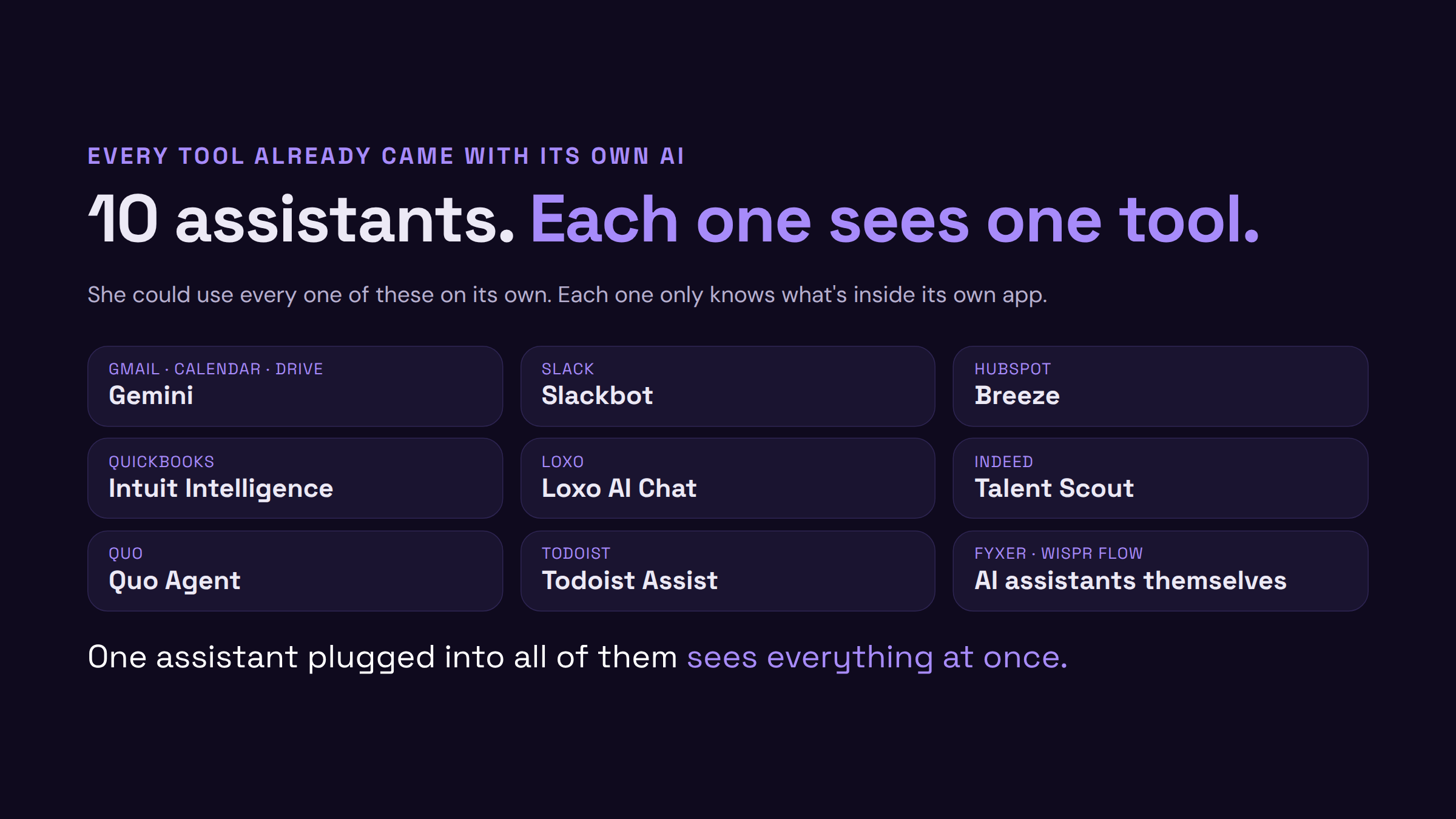
One assistant connected to all of them can do what none of them can do alone.
The five layers
Grade yourself on these. Be honest.
- It knows you. One main assistant holds your files, rules and voice. You never re-explain yourself.
- It's connected. It reads your email, calendar and systems, and does the work instead of describing it.
- It captures. Calls, meetings and notes land on their own. Nothing you said gets lost.
- It runs without you. Work fires on a schedule while you sleep.
- You can prove it. One real number moved. Time back or money in.
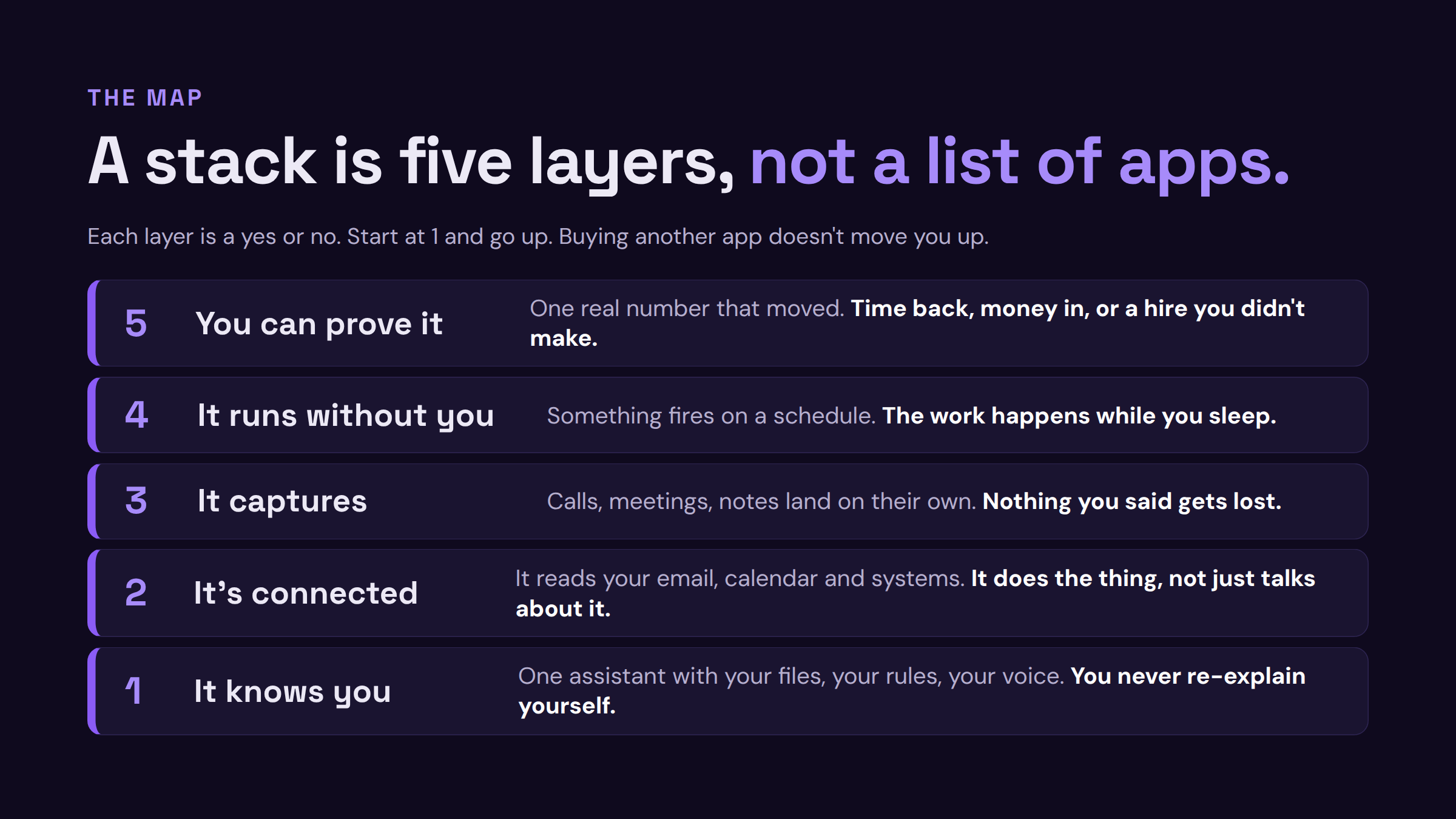
Most people I talk to are stuck at layer one or two. They keep shopping for layer-five tools anyway.
What it looks like at each layer
Before layer one, collecting. A solo founder posted on LinkedIn that she tested 40+ AI tools this year and pays for 12 of them, about $280 a month. None of them talk to each other.
Layer one, one seller's saved prompt. One seller we interviewed runs a single saved prompt. Feed it an account name and it hands back the account's plans, recent news and talking points before every call. One tool, every day.
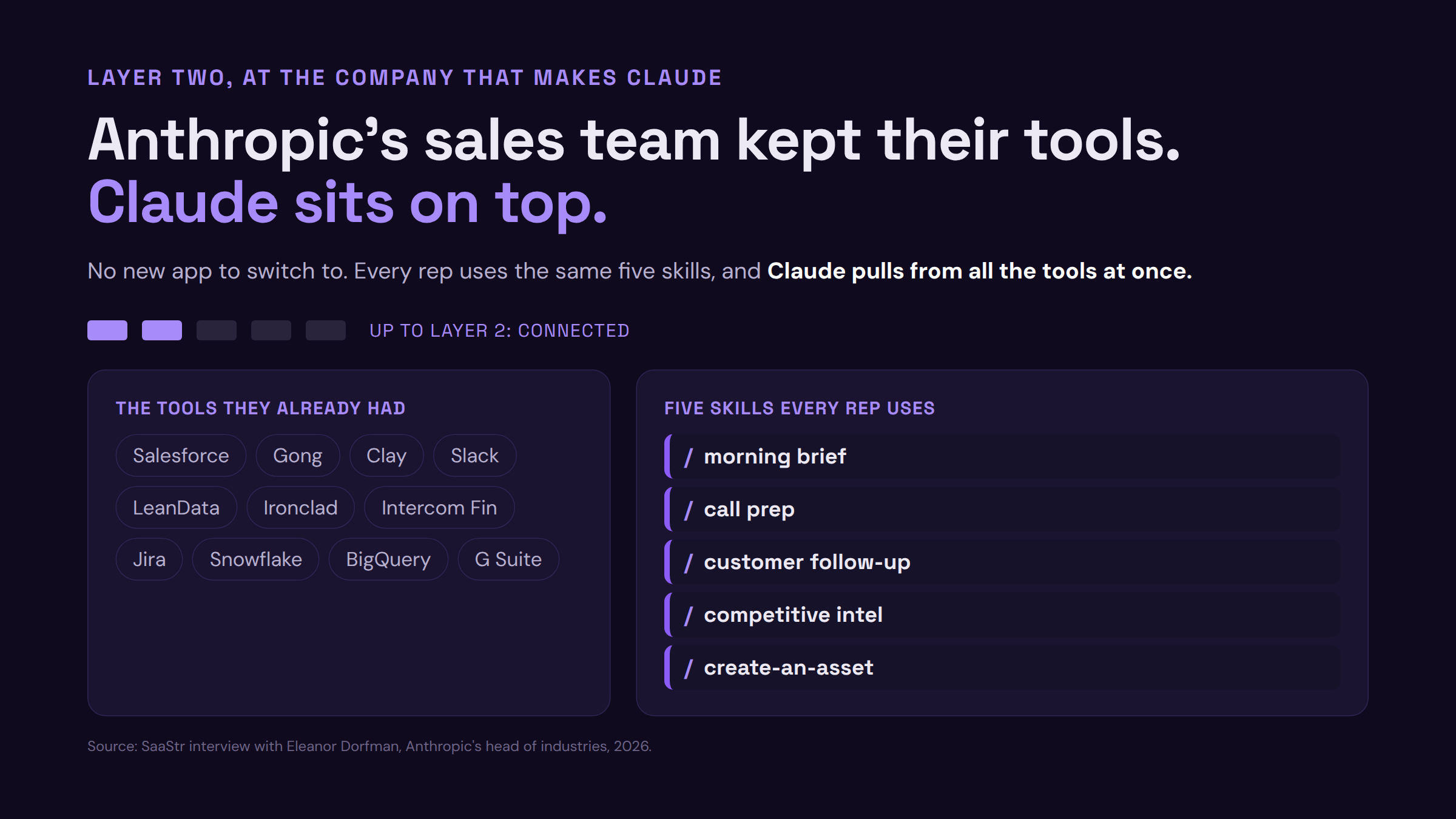
Layer two, at the company that makes Claude. Anthropic's own sales team kept the tools every sales team has: Salesforce, Gong, Clay and Slack. Then they gave every rep the same five skills: morning brief, call prep, customer follow-up, competitive intel and create-an-asset. A rep types /call prep and Claude pulls from all of those tools at once. Nobody switches to a separate Claude app. Claude sits on top of the stack instead of becoming one more tab.
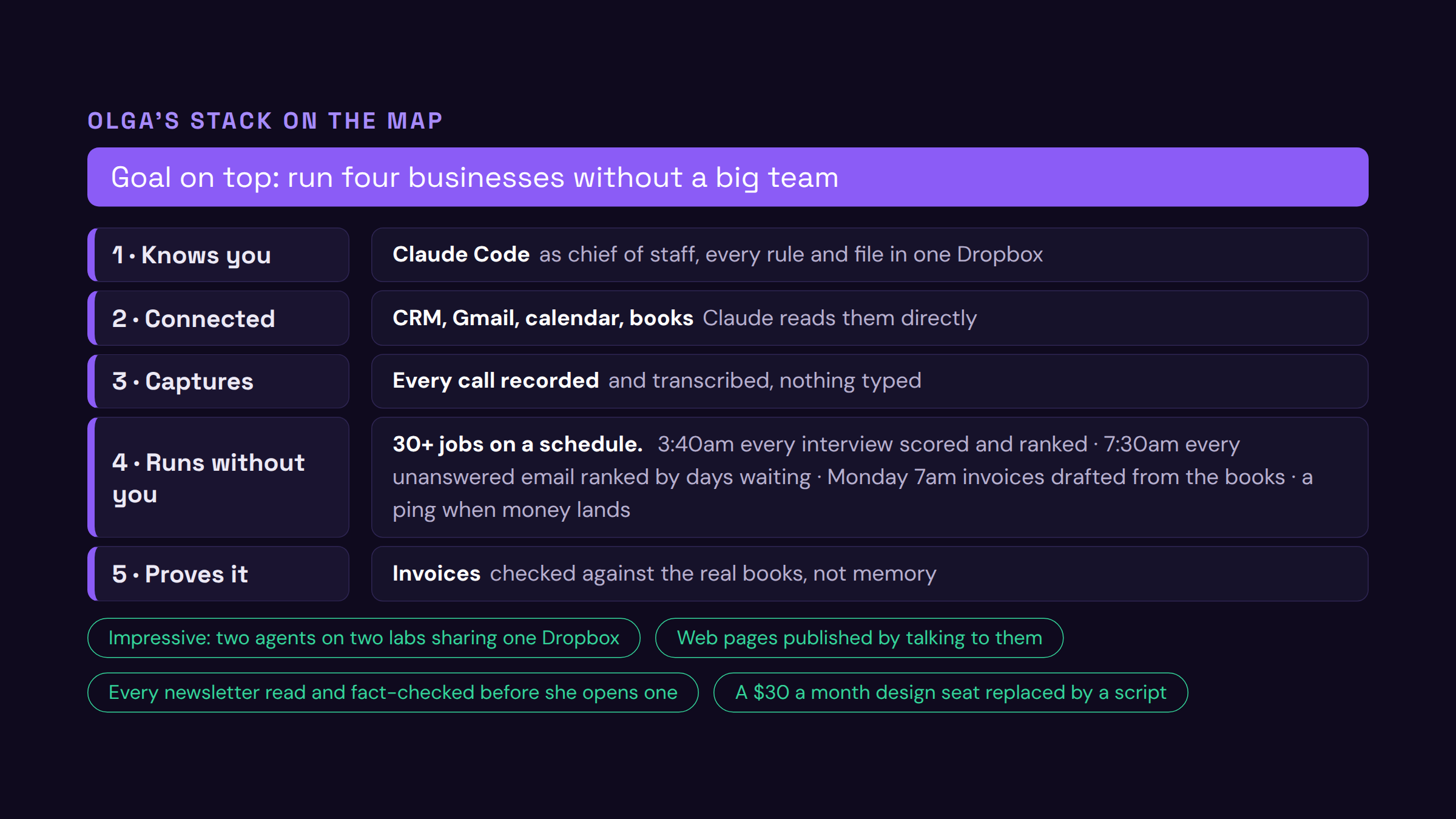
Layer three, every call on the record. Every call I take is recorded and transcribed, and I talk instead of type. Nothing said on a call gets lost.
Layer four, one seller's inbox. One seller we interviewed set up an email rule: when a prospect replies, AI drafts and sends the response without him touching it. One inbox trigger and one model. No six-tool stack.
Layer five, at scale. SaaStr runs sales with 3 people and 21+ AI agents, per Jason Lemkin's own teardown. Their inbound agent has had 17,000 conversations in a year and booked about 600 meetings.
Layer five, in a small business. My own stack is one assistant connected to HubSpot, Loxo, Gmail and QuickBooks. A deal closes in HubSpot, the job gets created in Loxo from the client call, and the invoice goes to QuickBooks after the hire. I don't open those apps anymore.
My morning brief summarizes the AI shows I follow in 13 minutes instead of 5 hours and 43 minutes. Last month it also told me to cancel a $30 Canva subscription I wasn't using. That's layer five: a number I can point to.
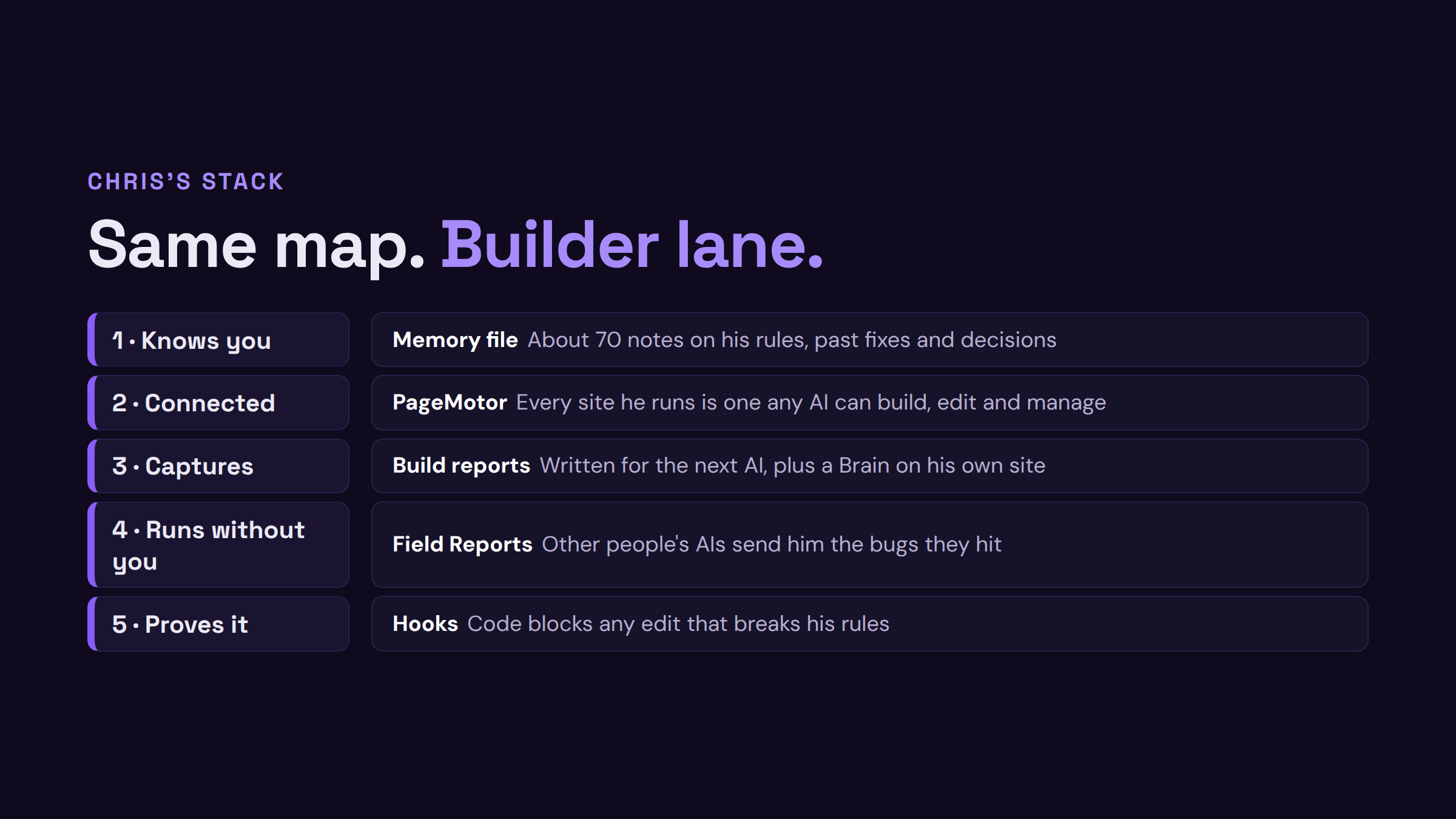
A different kind of stack. My co-host Chris Pearson builds software, so his stack looks nothing like mine. His process is spec, then plan, then build, then a report of what actually shipped. He runs zero unattended jobs on purpose.
His best trick works for anyone: he had Claude find the written rules it broke most often and turn them into hooks, small scripts that run every time. About 72% of his rules file moved into hooks.
Where most people are stuck
Back to the 81 sellers. None of them used AI to rehearse a call or a pitch. One person out of 81 measured whether any of it worked.
These are experienced professionals. They just stopped at layer one or two.
If you're hiring sellers
Don't ask "do you use AI?" Everyone says yes.
Ask "walk me through what you do with AI before a call." Listen for a routine, not a list of tools.
Then ask "how do you know it worked?" Only 1 in 81 could answer that.
Your homework
Fix your lowest layer before you buy anything.
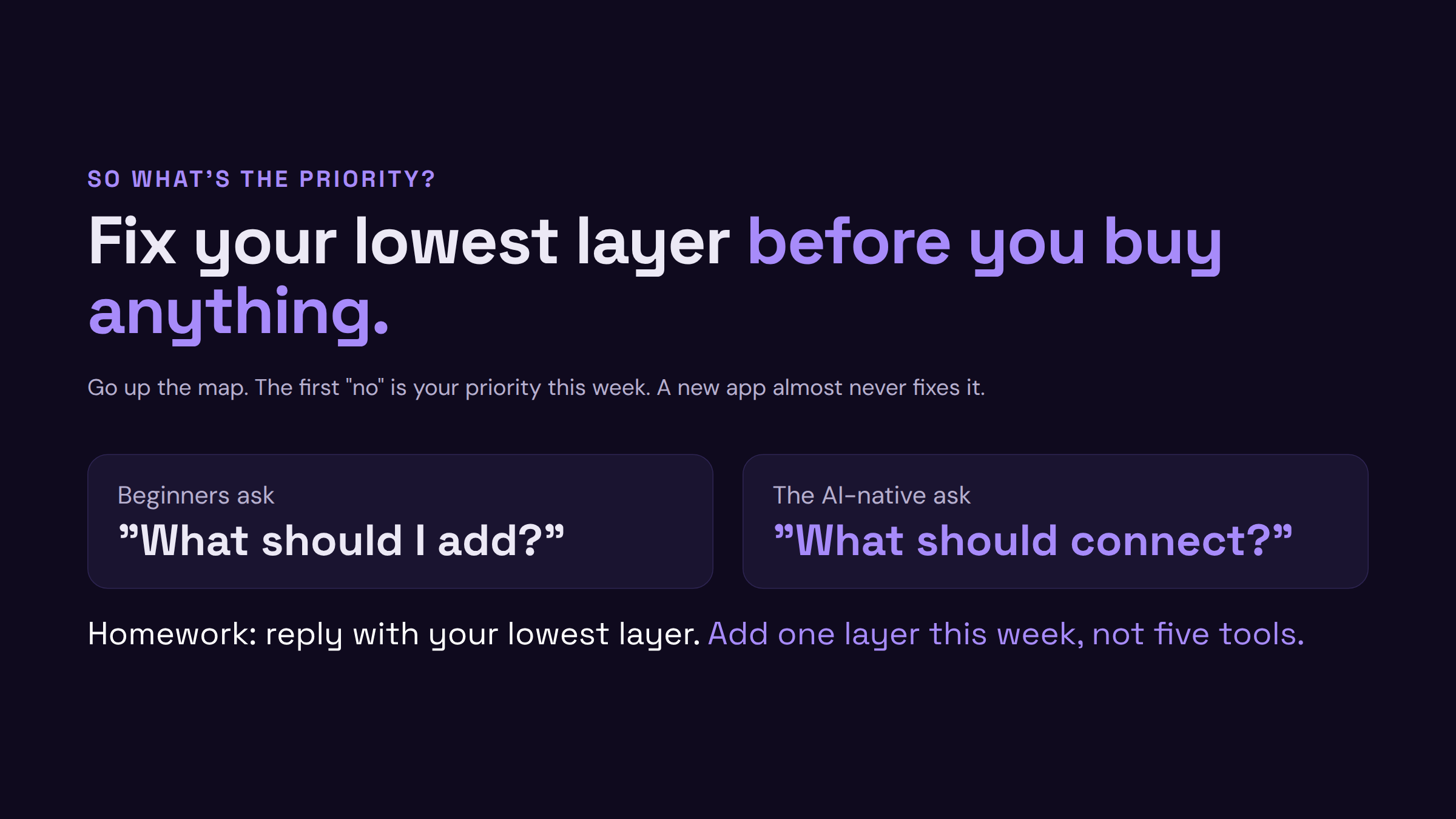
- List every tool you pay for.
- Check which ones have a connector or an API.
- Connect one of them to your main assistant this week.
If you're not sure where you are, paste the five layers into your assistant and ask it to rate your stack from 1 to 10. Then ask what to connect first.
So, what's in your AI stack? Reply to the email and tell me your lowest layer, and I'll tell you what I'd connect first.
Get every issue by email
One practical read every two weeks. What we see in 2,000 sales interviews a year, and what to do about it on Monday.
Originally published on LinkedIn in Get Me Someone Who Can Sell.